Waste Reduction: From Source Control to Resource Recycling
Metal waste is one of the major environmental burdens of sheet metal processing, and its generation runs through the entire process from raw material cutting to finished product processing. Reducing waste is not simply end-of-pipe treatment, but building a full-chain system of "source reduction - process control - recycling and reuse", which not only reduces resource waste but also lowers treatment costs.
Source Optimization: Intelligent Nesting and Process Innovation
Nesting design is a key link determining the amount of waste generated. Traditional manual nesting relies on experience, which easily leads to low sheet utilization and serious waste of leftover materials. Nowadays, with the help of professional CAD/CAM nesting software and artificial intelligence technology, the ultimate optimization of workpiece nesting can be achieved. For example, intelligent nesting systems of brands like Lantek can automatically calculate the optimal layout according to the shape and size of different workpieces, increasing sheet utilization by more than 8% and significantly reducing leftover materials. The more advanced nano-joining technology further breaks through nesting limitations: it connects cut workpieces to the sheet skeleton through extremely small connection points, enabling tight nesting without reserving excessive spacing, which not only ensures processing stability but also takes material utilization to a new level.
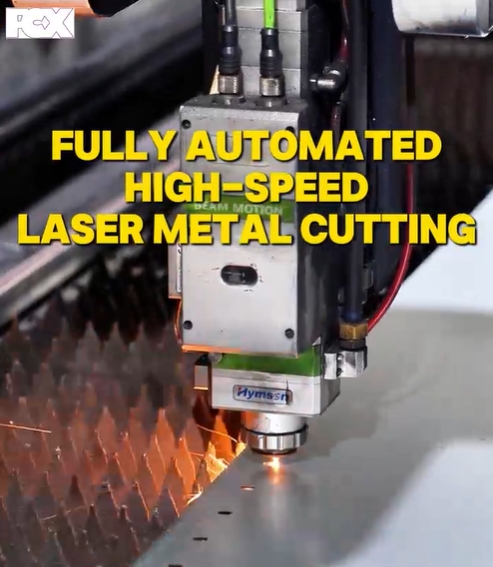
Process innovation also provides support for source waste reduction. The popularization of laser cutting has replaced some traditional shearing and blanking processes. Its high-precision feature can reduce processing allowances and avoid workpiece scrapping due to dimensional deviations. The "blanking cutting" function is specially designed for remaining sheets: it identifies the shape of residual materials through machine vision and automatically matches small workpieces for secondary cutting, turning leftover materials that would otherwise be discarded into valuable resources.
Process Control: Classified Recycling and Precise Treatment
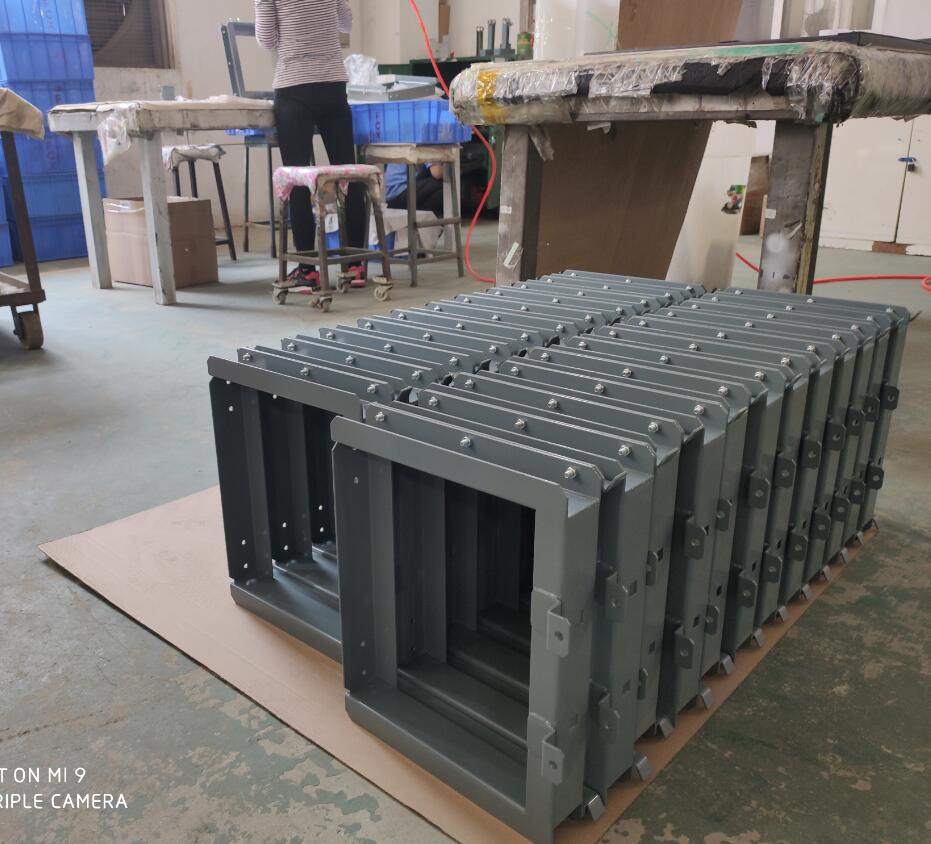
Even after source optimization, a certain amount of waste is still generated during processing. Scientific classification and treatment are the core of realizing resource recycling. Sheet metal waste can be divided into metal waste such as stainless steel, aluminum, copper and iron, and non-metal waste such as plastic and rubber according to materials; according to process sources, it can be divided into cutting leftovers, stamping scrap holes, welding slag, etc. By establishing a standardized classified recycling system with special collection containers and sorting equipment, precise collection of different types of waste can be achieved.
For metal waste, after pretreatment such as cleaning, crushing and briquetting, it can be sent to smelters for remelting into metal raw materials, realizing resource closed-loop. For mixed waste such as welding slag, professional equipment is used to separate metals from impurities to improve recycling purity. For oil-contaminated waste, oil-water separation equipment is adopted to remove oil stains; the treated waste oil can be recycled, and the wastewater is discharged up to standard after purification to avoid secondary pollution.
Energy Consumption Reduction: Technological Upgrade and Management Empowerment
Processes such as cutting, welding and bending in sheet metal processing all consume a lot of electrical energy, and some processes are accompanied by heat loss and exhaust gas emissions. Reducing energy consumption needs to start from three aspects: equipment upgrading, process optimization and intelligent management, to achieve the dual goals of efficient energy utilization and pollutant emission reduction.
Equipment Iteration: High-Efficiency and Energy-Saving Equipment Becomes Mainstream
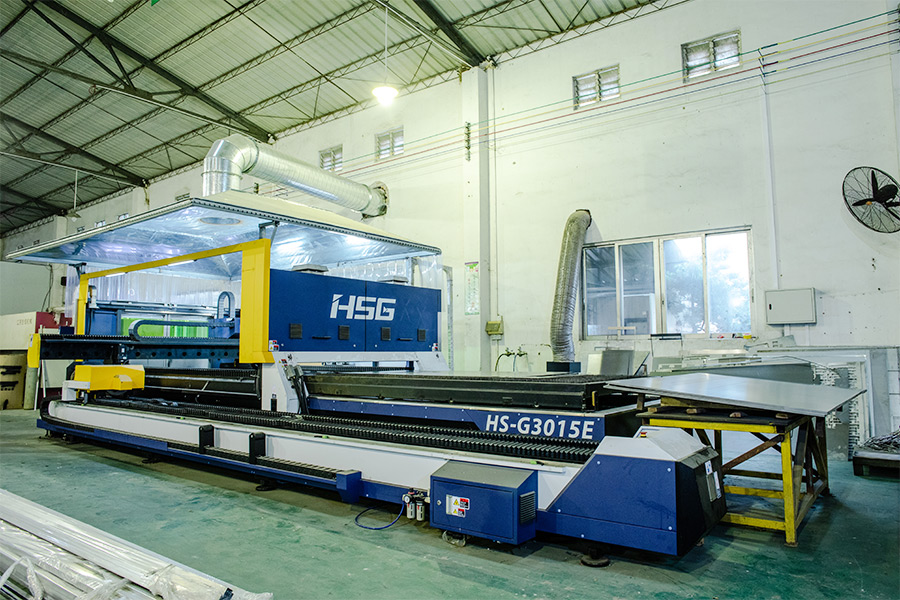
Traditional sheet metal processing equipment has high energy consumption and low efficiency, which is the main source of energy waste. The promotion and application of new-generation energy-saving equipment have become the key to energy reduction: laser cutting machines adopt fiber laser technology, which reduces energy consumption by more than 30% compared with traditional CO₂ laser cutting machines, while having faster cutting speed and higher precision; welding equipment is upgraded to high-frequency inverter welding machines, which greatly improves thermal efficiency and reduces welding fume and exhaust gas emissions; bending machines are equipped with servo drive systems, which can accurately adjust power output according to workpiece requirements to avoid ineffective energy consumption.
The upgrading of environmental protection supporting equipment is also indispensable. For metal dust and exhaust gas generated from cutting and welding, high-efficiency collection equipment such as bag filters and electrostatic precipitators, as well as purification devices such as activated carbon adsorption towers and RTO (Regenerative Thermal Oxidizer), can be installed to achieve up-to-standard emission of dust and harmful gases. Water-based cutting fluids are used instead of traditional oil-based cutting fluids, reducing oil emissions and energy consumption, while lowering subsequent treatment costs.
Process Optimization: Reconstruction of Low-Consumption Processes
The optimization and reconstruction of process routes can fundamentally reduce energy consumption. For example, integrating and optimizing multiple processes reduces workpiece transfer and repeated processing links, lowering process energy consumption; adopting oxidation-free welding technology reduces post-welding grinding and derusting processes, which not only saves electrical energy and consumables but also reduces pollutant generation; promoting robotic automated processing to replace manual operations not only improves processing efficiency but also avoids energy waste and workpiece scrapping caused by human errors through precise control of process parameters.
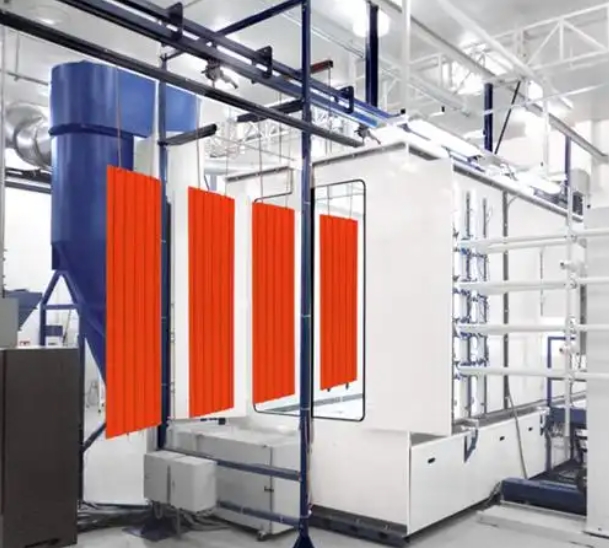
In the surface treatment link, water-based coatings replace solvent-based coatings, which can significantly reduce volatile organic compounds (VOCs) emissions and lower heat energy consumption during the drying process. Adopting electrostatic spraying technology improves coating utilization, reduces material waste and energy consumption, and conforms to green production requirements.
Intelligent Management: Full-Process Energy Consumption Visualization
Relying on the industrial Internet and MES (Manufacturing Execution System), sheet metal enterprises can realize full-process energy consumption monitoring and intelligent scheduling of production. By installing energy consumption sensors on equipment, real-time collection of energy consumption data of processes such as cutting and welding is carried out; combined with AI analysis tools, energy consumption bottlenecks are accurately identified to provide data support for optimizing production plans. For example, the Lantek MES system can realize intelligent management of remaining materials and production scheduling optimization, reduce equipment idleness rate and warehouse energy consumption, and predict the carbon footprint of workpieces to plan low-consumption production schemes in advance.
Enterprises can also establish green management systems, strengthen environmental protection training for employees, cultivate energy-saving operating habits, and incorporate energy consumption indicators into performance appraisal to form an energy-saving atmosphere with full participation. The guidance of the government and industry associations is also important: by formulating green production standards and introducing preferential tax policies, enterprises are encouraged to take the initiative in energy-saving transformation and accelerate the green transformation of the industry.
Green Transformation: An Inevitable Path of Government-Enterprise Collaboration
The green transformation of sheet metal processing is not a "solo show" of a single enterprise, but requires the joint efforts of the government, enterprises and industry associations. Under the requirements of green development of manufacturing industry in the "15th Five-Year Plan" period, the government can support enterprises in tackling key technologies of intelligent design software and green production through establishing industrial chain risk early warning systems and introducing core technology subsidy policies; industry associations take the lead in formulating green production standards to promote the matching and sharing of environmental protection facilities; as the main body of transformation, enterprises need to take the initiative to increase investment in technological research and development and equipment, transforming from "single production" to "full-chain green services".
From intelligent nesting to reduce waste, to energy-saving equipment to lower energy consumption, and then to resource recycling to achieve closed-loop, the green transformation of sheet metal processing is reshaping the industry development model. This is not only a practical need to cope with environmental pressure and reduce production costs, but also an important path to promote the high-quality development of manufacturing industry and achieve the "dual carbon" goals. In the future, with the continuous innovation of technology and the improvement of standards, sheet metal processing will truly realize green development of "high efficiency, low consumption and environmental protection", injecting strong momentum into the sustainable transformation of the manufacturing industry.