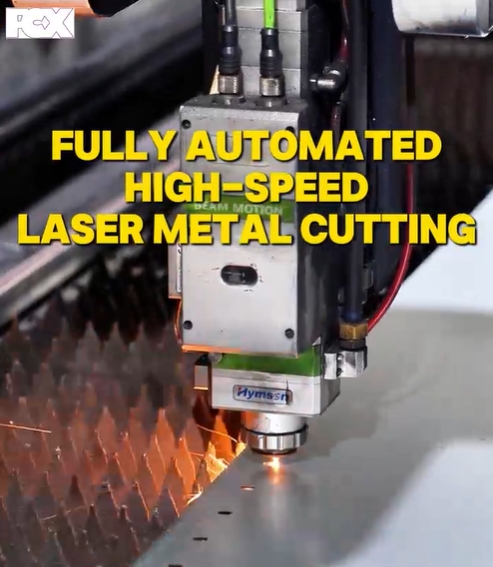
I. Oil-Free Cutting Technology: Say Goodbye to Oil Pollution for Clean Processing
1. Environmental Dilemmas of Traditional Cutting Processes
Traditional sheet metal cutting (such as blanking, milling, bending, etc.) relies on cutting oils for lubrication, cooling and chip removal. These mineral oil-based cutting fluids generate oil mist and wastewater during use, which not only pollute soil, water sources and air but also may endanger the health of operators. Meanwhile, the storage and recycling of cutting oils require additional costs, and the environmentally friendly disposal of waste cutting fluids has become a heavy burden for enterprises, which is seriously inconsistent with modern green manufacturing concepts.
2. Core Principles and Key Solutions of Oil-Free Cutting Technology
The core of oil-free cutting technology is to break away from reliance on traditional cutting oils and achieve "oil-free" processing through technological innovation, mainly involving three technical paths:
· Dry Cutting Technology: Directly eliminates cutting oils, realizing lubrication and cooling during cutting through high-performance tool materials, optimized cutting parameters and structural design. For example, super-hard tools such as Polycrystalline Cubic Boron Nitride (PCBN) and ceramics, with their high temperature resistance and wear resistance, can reduce frictional heat generation in high-speed cutting; combined with optimized tool geometric angles (such as large rake angles and negative chamfers), cutting force and temperature are reduced, avoiding material adhesion.
· Minimum Quantity Lubrication (MQL) Technology: Instead of being completely oil-free, it uses a small amount of environmentally friendly lubricants (such as vegetable-based lubricants and ester-based lubricants) that are precisely delivered to the cutting area in the form of high-pressure spray. The dosage is only one ten-thousandth of that of traditional cutting oils (usually 5-50 milliliters per hour). This method not only ensures lubrication and cooling effects but also significantly reduces pollutant emissions, with simple subsequent cleaning.
· Gas Cooling Assisted Technology: Uses gases such as compressed air, nitrogen and carbon dioxide instead of cutting oils. Low-temperature gases (such as liquid nitrogen cooled to -196℃) quickly take away cutting heat and assist in chip removal. It is especially suitable for sheet metal processing of high-temperature sensitive materials (such as aluminum alloys and stainless steel), producing no wastewater or oil mist at all.
3. Technical Advantages of Oil-Free Cutting
Oil-free cutting technology not only solves the pollution problems of traditional processes but also has multiple advantages: environmentally, it eliminates oil mist emissions and wastewater generation, reducing waste disposal costs by over 80%, which complies with regulations such as the EU RoHS Directive and China's Law of the People's Republic of China on the Prevention and Control of Environmental Pollution by Solid Waste; economically, it saves the costs of purchasing, storing and recycling cutting oils, extends tool life by 30%-50%, and improves processing efficiency by 15%-20%; in terms of quality, it avoids the impact of oil residues on subsequent surface treatment of sheet metal parts, significantly improving processing accuracy and surface finish.
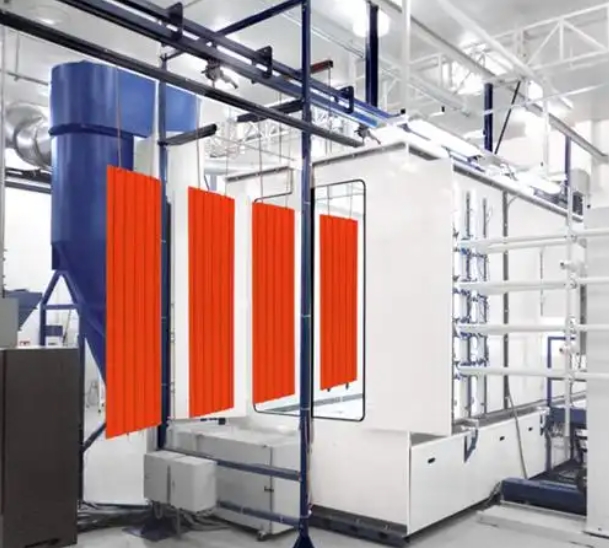
II. Green Surface Treatment Technology: Replacing Traditional Chemical Treatment for Low-Pollution Protection
Surface treatment of sheet metal parts is a key link to improve their corrosion resistance, wear resistance and aesthetics. Traditional processes (such as chrome plating, galvanizing passivation, and chemical conversion coating) mostly rely on heavy metal-containing or highly polluting chemical agents such as chromates and phosphates. The generated wastewater contains harmful substances such as chromium, nickel and phosphorus, which are difficult to treat and pose high pollution risks. Green surface treatment technology, centered on "low toxicity, low emission and recyclability", has become the mainstream alternative in the industry.
1. Analysis of Mainstream Green Surface Treatment Technologies
· Chromium-Free Passivation Technology: Replaces traditional chromate passivation, using environmentally friendly passivators such as zirconium-titanium-based, silane-based and rare earth-based agents to form a dense protective film on the surface of sheet metal parts. This technology does not contain heavy metals such as hexavalent chromium, the passivation solution can be recycled, and wastewater treatment is simple. Its protective performance is not inferior to traditional processes, and it is widely used in the surface treatment of aluminum alloys, galvanized sheets and other sheet metal parts.
· Environmentally Friendly Electrophoretic Coating Technology: Replaces solvent-based electrophoretic paint with water-based electrophoretic paint, significantly reducing VOC (Volatile Organic Compound) emissions, with the utilization rate of electrophoretic paint reaching over 95%. Its coating is uniform and has strong adhesion, combining corrosion protection and decorative functions. It is suitable for the surface treatment of high-end sheet metal products such as auto parts and home appliance casings, complying with the "zero emission" manufacturing trend.
· Powder Coating Technology: Uses solid powder coatings (without solvents) that adhere to the surface of sheet metal parts through electrostatic adsorption and form a coating after high-temperature curing. This technology has no VOC emissions, the powder recovery rate can reach over 98%, and the coating has high hardness, wear resistance and rich colors. It has become the mainstream environmentally friendly technology for sheet metal surface treatment, widely used in construction, engineering machinery, furniture and other fields.
· Laser Cleaning Technology: Different from the "chemical stripping" of chemical cleaning, laser cleaning uses high-energy laser beams to irradiate the surface of sheet metal parts, making pollutants such as oil, rust and oxide layers vaporize or peel off instantly to achieve "physical cleaning". This technology consumes no chemical agents, generates no wastewater, has high cleaning efficiency and does not damage the substrate. It is suitable for the surface pretreatment of precision sheet metal parts, especially in the aerospace field with extremely high environmental requirements.
2. Core Advantages of Green Surface Treatment
Green surface treatment technology not only solves the pollution problems of traditional chemical treatment but also has the multiple characteristics of "environmental protection + high efficiency + high quality": environmentally, it has no heavy metal emissions and extremely low VOC emissions, complying with the strictest global environmental standards; in terms of efficiency, some technologies (such as powder coating and laser cleaning) can realize automated continuous production, shortening the processing cycle by over 30%; in terms of quality, the stability and durability of the coating/passivation film are stronger, which can meet the service requirements of sheet metal parts under complex working conditions.
III. Application Practice and Industry Value of Eco-Friendly Technologies
Today, oil-free cutting and green surface treatment technologies have been widely applied in various industries on a large scale. For example, a leading auto parts manufacturer adopted dry cutting technology to process sheet metal structural parts, reducing cutting oil consumption by 12 tons per year, lowering wastewater treatment costs by 70%, and increasing product qualification rate by 5%; an electronic equipment manufacturer adopted a combined process of chromium-free passivation + powder coating, realizing "zero heavy metal emissions" for sheet metal casings, and its products obtained EU REACH certification, successfully entering the international high-end market.
From the perspective of industry development, the promotion and application of these eco-friendly technologies not only help enterprises avoid environmental compliance risks and reduce production costs but also promote the transformation of the sheet metal processing industry from "high pollution and high consumption" to "green low-carbon and circular efficiency". With the continuous iteration of technologies, the applicable material range of oil-free cutting will be further expanded, and the cost of green surface treatment will continue to decrease. Eco-friendly sheet metal technology will become an important part of enterprises' core competitiveness.
IV. Future Outlook: Green Manufacturing Becomes Industry Consensus
In the future, the environmental transformation of the sheet metal processing industry will present three major trends: first, technological integration, where oil-free cutting and green surface treatment will be deeply combined with digital and automated technologies to realize the integration of "clean processing + intelligent production"; second, material environmental protection, where the R&D and application of supporting materials such as environmentally friendly tool materials and degradable coatings will be accelerated to form a full-chain environmental protection system; third, standard unification, where global environmental regulations will be further tightened, promoting the industry to form unified environmental technology standards and evaluation systems.
For sheet metal processing enterprises, embracing oil-free cutting and green surface treatment technologies is not only an inevitable requirement to respond to environmental policies but also a strategic choice to achieve sustainable development. With the continuous maturity and popularization of eco-friendly technologies, green manufacturing will no longer be an "additional cost" but a core advantage for enterprises to reduce costs, improve efficiency and enhance market competitiveness, ultimately promoting the entire sheet metal processing industry towards a more environmentally friendly, efficient and high-quality development stage.