
I. Bending Process: Precision Shaping to "Bend the Thin Sheet into the Desired Shape"
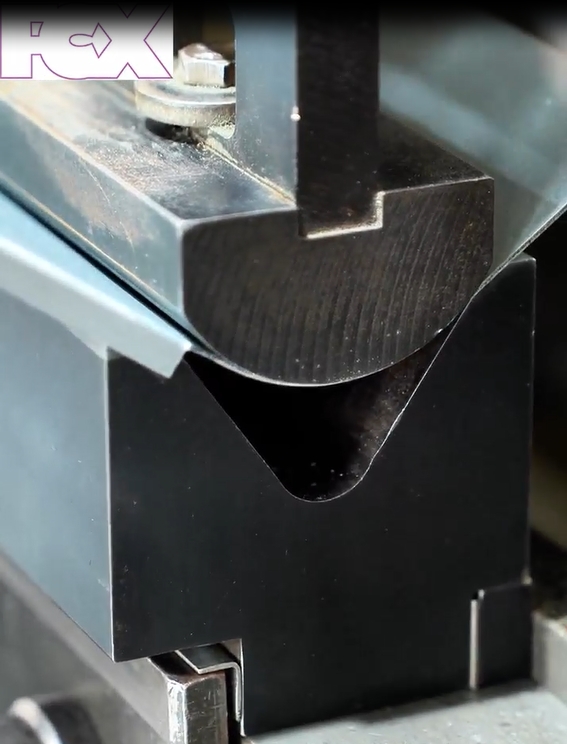
Bending is a key process to realize part forming in sheet metal processing. Its core is to apply external force to the cut thin metal sheet through a bending machine to make it undergo plastic deformation and form a predetermined angle and shape. For example, the corners of equipment casings and the bending edges of brackets all rely on this process. Although the bending process seems simple, it has extremely high requirements on equipment, parameters and operation. A slight deviation may lead to part scrapping. Its core technical points are mainly concentrated in three aspects.
1. Material Adaptation: Choosing the Right Base Material is the Foundation of Successful Bending
Sheet metals of different materials and thicknesses have significant differences in bending difficulty and process requirements, so the scheme needs to be adjusted accordingly. Ordinary cold-rolled steel plate (SPCC) has good ductility and excellent bending performance, making it the most commonly used bending base material. The bending radius can be controlled at 0.5-1 times the material thickness; stainless steel plate (SUS304/316) has high strength but slightly poor toughness, and is prone to cracking during bending. A larger bending radius is required (usually 1.5-2 times the material thickness), and the surface oil must be removed before bending to avoid scratches; aluminum plate is soft and easy to deform, so the pressure must be controlled during bending to prevent wrinkling, and special bending dies must be used to avoid aluminum chip adhesion affecting precision. In addition, the material thickness also affects the bending effect. Thin materials (≤1.5mm) are prone to springback and warpage, so the bending gap needs to be reduced and the pressing force increased; thick materials (≥3mm) require greater bending force, and the yield strength of the material must be checked to avoid die damage.
2. Process Parameters: Grasping Details to Avoid Forming Defects
The core parameters of bending include bending angle, bending radius and die selection. The three must cooperate with each other to ensure forming precision. The bending angle needs to reserve a springback amount according to the material characteristics - after bending, the thin metal sheet will produce springback due to elastic deformation. The springback angle of ordinary cold-rolled steel plate is about 1-3°, and that of stainless steel is about 3-5°. When setting the bending angle, the corresponding springback amount must be added on the basis of the target angle to ensure that the formed angle meets the design requirements. The design of the bending radius must take into account both product requirements and material characteristics. Too small a radius will lead to excessive stretching and cracking of the material, while too large a radius will affect structural strength and assembly precision. Usually, the minimum bending radius can refer to the formula Rmin=K×t (t is the material thickness, K is the coefficient, K=0.5 for ordinary steel plate, K=1.5 for stainless steel, K=1.0 for aluminum plate). If the design requirement is smaller than the minimum radius, the material must be annealed in advance to improve ductility.
The die selection must match the size and shape of the workpiece: the upper bending die (punch) includes straight edge die, arc die, sharp knife die, etc. The arc die is suitable for large-radius bending, and the sharp knife die is suitable for small-angle precision bending; the opening width of the lower die (die cavity) is usually 6-10 times the material thickness. Too narrow an opening is easy to damage the material, and too wide an opening will increase the springback amount. In addition, the bending sequence must follow the principle of "inside first, outside later; small first, large later; complex first, simple later" to avoid subsequent bending interfering with the processed parts and causing workpiece deformation.
3. Precision Control: Grasping Details to Ensure Batch Consistency
Bending precision directly determines the assembly effect of parts, which needs to start from two aspects: equipment and operation. The bending machine must be calibrated regularly to ensure that the parallelism of the slider operation and the flatness deviation of the workbench do not exceed 0.02mm/m, and the die must be installed firmly with uniform gaps; the operator must accurately position the workpiece and fit the positioning block to avoid deviation. During mass production, the size must be inspected regularly to correct parameter deviations in time. At the same time, the bending speed and pressing force must be set reasonably. Too fast a speed is easy to cause workpiece vibration, and too slow a speed affects efficiency; insufficient pressing force will make the workpiece slide, and excessive pressing force may damage the material surface.
II. Stamping Process: Efficient Mass Production to Achieve "Batch Precision Forming"
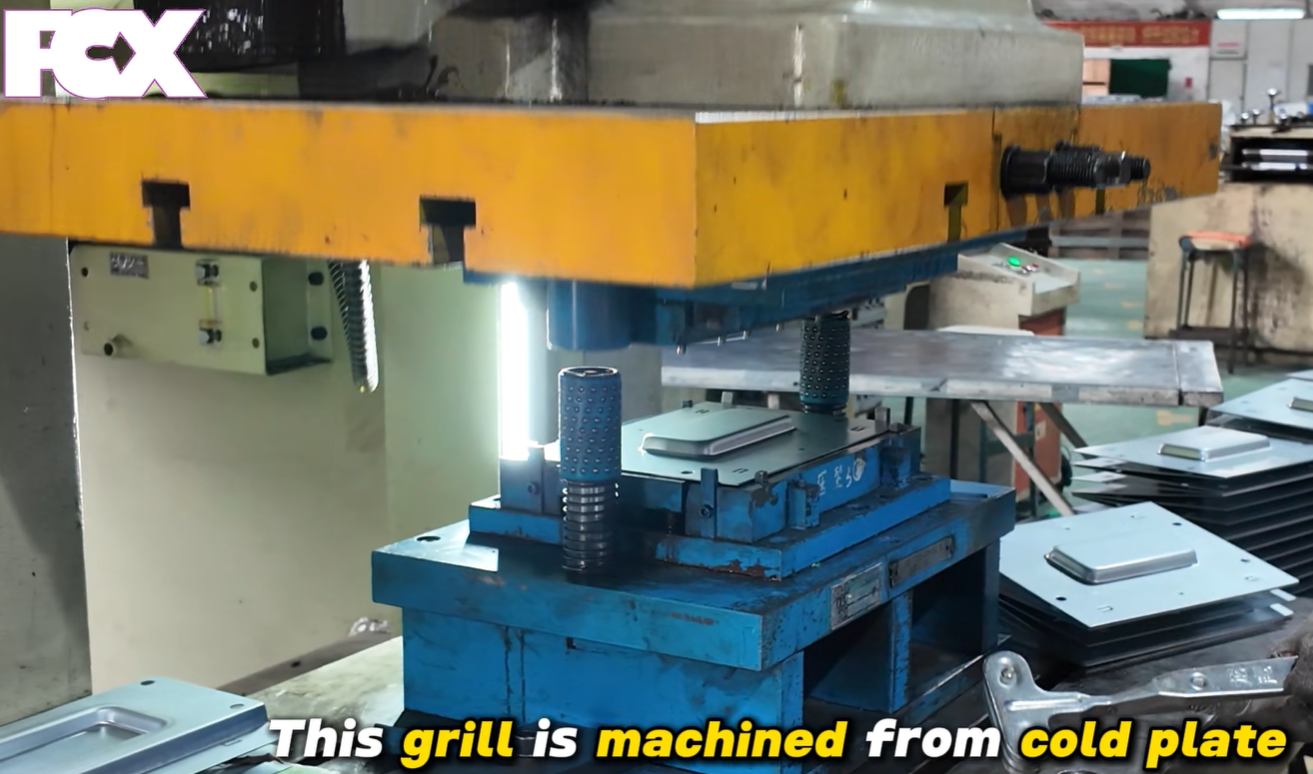
Stamping process is the core means to realize mass production in sheet metal processing. Its core is to use a punch press and die to apply pressure to the thin metal sheet, making it undergo plastic deformation or separation, and quickly produce parts of specific shapes. For example, holes, protrusions, grooves, etc. on sheet metal parts can all be completed at one time through stamping. The advantages of stamping process are high efficiency, stable precision and low cost, which is suitable for mass production. Its technical points are mainly concentrated on die, stamping method and quality control.
1. Die: The "Core Tool" of Stamping, Determining Part Precision
The die is the key to the stamping process, which directly affects the dimensional precision and appearance quality of parts. A high-quality die can realize tens of thousands or even hundreds of thousands of stampings, ensuring the consistency of batch parts. The die is mainly composed of punch, die, positioning device and guiding device. The gap between the punch and the die must be strictly controlled - too large a gap will cause burrs on the edge of the part; too small a gap will increase die wear, and at the same time cause indentations on the part surface, even cracking. The die material must be high-strength and high-wear-resistant steel, and must undergo heat treatment such as quenching and tempering to improve service life and precision. In addition, the die design must be combined with the part shape to avoid difficult die processing due to complex structure, and a reasonable draft angle must be reserved to facilitate part removal.
2. Stamping Methods: Choose on Demand to Adapt to Different Forming Needs
According to processing needs, stamping is mainly divided into two categories: separation stamping and forming stamping, with different technical points for different methods. The core of separation stamping is to separate the sheet metal material according to the design size. Common types include punching, blanking, shearing, etc. For example, punching round holes and square holes on sheet metal parts, or cutting out the shape of parts. The key is to ensure that the cut is flat and free of burrs, and the dimensional error is controlled within ±0.1-0.2mm. Forming stamping is to make the sheet metal material undergo plastic deformation through pressure to form shapes such as protrusions, grooves and flanges. Common types include drawing, bending, embossing, etc. For example, the curved surface of automobile shell and the reinforcing rib of sheet metal parts. The key is to control uniform deformation and avoid defects such as wrinkles, cracking and springback.
For mass-produced parts, the continuous stamping process is usually adopted, which integrates multiple processes (such as punching, blanking, bending) into one set of dies. Through the continuous action of the punch press, the part processing is completed at one time, which greatly improves production efficiency. For small-batch and complex-shaped parts, single-process stamping can be adopted to flexibly adjust process parameters and reduce die costs.
3. Quality Control: Avoid Common Defects to Ensure Product Qualification
Common defects in the stamping process include burrs, wrinkles, cracking, dimensional deviation, etc., which need targeted prevention and control. Burrs are mainly caused by unreasonable die gaps or die wear, so the die gap must be adjusted in time and the die edge ground; wrinkles are mostly caused by uneven material thickness, insufficient pressing force or unreasonable die design, so base materials with uniform thickness must be selected, the pressing force increased, and the die structure optimized; cracking is mainly caused by insufficient material ductility, too fast stamping speed or too sharp die edge, so high-quality materials must be replaced, the stamping speed adjusted, and the die edge passivated. At the same time, the stamped parts must be deburred and polished to ensure a smooth surface, laying the foundation for subsequent surface treatment.
III. Laser Cutting: Precision Blanking to Unlock New Possibilities for "Complex Shape Processing"
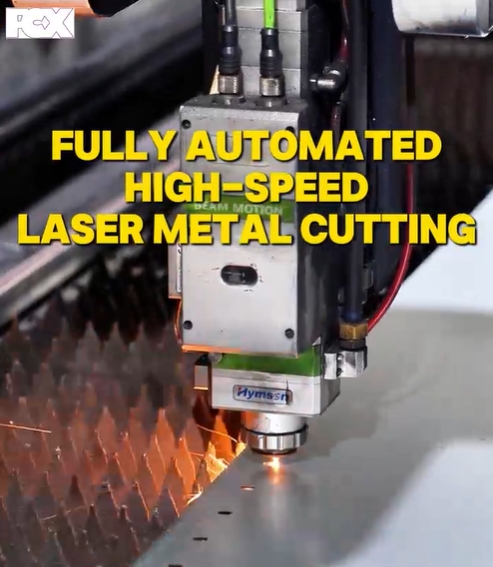
With the development of manufacturing towards precision and intelligence, laser cutting has gradually become the core blanking process of sheet metal processing. Its core is to use a high-energy density laser beam to melt and vaporize the thin metal sheet to achieve precision blanking. Compared with traditional shearing and stamping blanking, laser cutting has the advantages of high precision, flat cut and strong flexibility. It can cut any complex shape without dies, and is suitable for small-batch, personalized and high-precision part processing. Its technical points are mainly concentrated on laser parameters, cutting speed and auxiliary gas.
1. Laser Parameters: Precise Matching to Balance Efficiency and Precision
The core parameters of laser cutting include laser power, spot size and focal length, which must be reasonably matched according to the material and thickness of the material. Laser power determines the cutting capacity. The thicker and harder the material, the greater the required laser power - for example, when cutting 1mm thick cold-rolled steel plate, the power can be set to 500-1000W; when cutting 5mm thick stainless steel plate, the power needs to be increased to more than 2000W. The spot size determines the cutting precision. The smaller the spot, the higher the cutting precision. Usually, the spot diameter of laser cutting can be controlled within 0.1-0.3mm, so the part dimensional error can be controlled within ±0.05-0.1mm, which is much higher than the traditional blanking process. The focal length affects the flatness of the cut. The focal length must be adjusted according to the material thickness to ensure that the laser beam is focused on the material surface, avoiding defects such as inclined cut and burrs.
2. Cutting Speed: Reasonable Regulation to Balance Efficiency and Quality
Cutting speed is closely related to material thickness and laser power, and a balance must be found between efficiency and quality. Too fast cutting speed will lead to incomplete cutting of the material, resulting in defects such as burrs and slag hanging; too slow cutting speed will increase the heat-affected zone of the material, leading to part deformation and reducing production efficiency. For example, when cutting 1mm thick aluminum plate, the speed can be set to 10-15m/min; when cutting 3mm thick cold-rolled steel plate, the speed can be set to 3-5m/min. In addition, for complex-shaped parts, the cutting speed must be appropriately reduced to avoid overheating and deformation at the corners.
3. Auxiliary Gas: Indispensable to Improve Cutting Quality
In the laser cutting process, the role of auxiliary gas is to blow away the slag generated during cutting, cool the cut and prevent part oxidation. Different materials require different auxiliary gases. When cutting carbon steel, oxygen is usually used as the auxiliary gas. Oxygen can react with carbon steel to release a lot of heat, accelerate the cutting process and blow away the slag, but the oxygen pressure must be controlled to avoid excessive cut width; when cutting stainless steel and aluminum plate, nitrogen is usually used as the auxiliary gas. Nitrogen is an inert gas, which can prevent part oxidation, ensure a flat cut without oxide layer, and is suitable for parts with high surface quality requirements; when cutting non-ferrous metals such as copper and brass, argon can be used. Argon has a better cooling effect, which can effectively reduce the heat-affected zone and avoid part deformation.
IV. Coordinated Cooperation of the Three Processes: Creating High-Quality Sheet Metal Parts
Bending, stamping and laser cutting do not exist independently, but cooperate with each other to form a complete sheet metal processing process. Usually, the processing process is as follows: first, the thin metal sheet is cut into the required basic shape through laser cutting or stamping blanking; then, the detailed forming such as holes, protrusions and grooves is completed through stamping process; finally, the final shape of the part is realized through bending process. Some complex parts also need subsequent processes such as welding and surface treatment.
For example, for the electric control cabinet of industrial equipment, first, the basic components such as the panel and side plate of the cabinet are obtained through laser cutting blanking; then, heat dissipation holes and mounting holes are punched on the panel through stamping process; then, each component is bent and formed through bending process; finally, subsequent surface treatments such as welding and powder spraying are carried out to finally produce qualified cabinets. In this process, the precision control of the three processes is indispensable - the precise blanking of laser cutting is the foundation, the detailed forming of stamping is the key, and the precise shaping of bending is the guarantee. Only when the three cooperate with each other can high-precision, good-looking and high-performance sheet metal parts be created.
V. Conclusion: Technological Upgrade of Sheet Metal Processing Empowers Manufacturing Development
As the core processes of sheet metal processing, bending, stamping and laser cutting directly determine the quality and production efficiency of sheet metal parts, and also affect the development of downstream manufacturing. With the rise of Industry 4.0 and intelligent manufacturing, sheet metal processing is moving towards digitalization, automation and precision. The wide application of CNC bending machines, automatic stamping production lines and high-power laser cutting machines not only improves processing precision and efficiency, but also reduces labor costs, realizing the balance between small-batch, personalized production and large-batch, standardized production.
Understanding the key technical points of sheet metal processing can not only help us better understand the sheet metal products around us, but also provide reference for personnel engaged in manufacturing, procurement, design and other related work. In the future, with the continuous progress of technology, the sheet metal processing technology will be more improved, and will continue to empower fields such as electronics, automobiles, medical care and industrial equipment, promoting the manufacturing industry to develop in a higher quality and more efficient direction.